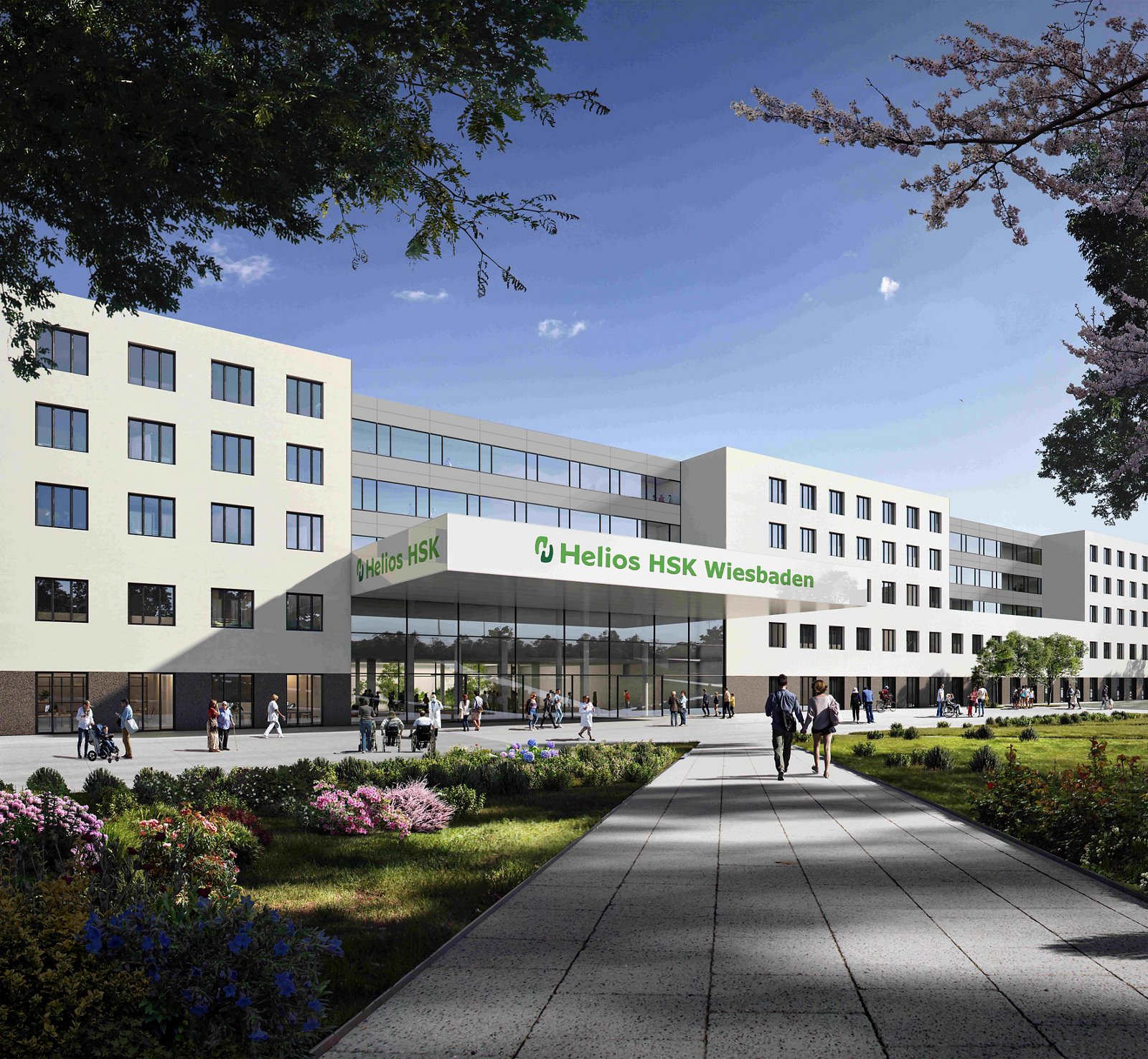
Helios Dr. Horst Schmidt Hospital Wiesbaden (HSK Wiesbaden) is the largest tertiary care hospital in Wiesbaden and one of the largest hospitals in the federal state of Hesse. The hospital treats approximately 136,000 patients annually, including about 97,000 outpatients, 37,000 inpatients, and 1,700 day-care patients. The facility has a capacity of 927 inpatient beds.
In 2024, HSK commissioned a new hospital complex with a total area of approximately 100,000 m², comprising 3,500 rooms and its own helipad. More than €300 million was invested in the construction of the new facility, which is currently regarded as one of the largest and most technologically advanced hospital projects in Germany.
In 2025, Helios Dr. Horst Schmidt Hospital achieved 40 out of 44 corporate clinical quality indicators (90.9%), demonstrating particularly strong performance in cardiology, vascular surgery, stroke care, and abdominal surgery. These results reflect the hospital’s high treatment effectiveness and consistently strong quality of care, with performance indicators in most clinical areas exceeding the national average in Germany.
More about the hospital
Helios Dr. Horst Schmidt Hospital Wiesbaden provides care across 25 medical specialties, represented by 39 departments and 24 centers and institutes. In addition, the hospital’s infrastructure includes 22 operating rooms, including a hybrid operating room and a robot-assisted operating room equipped with the da Vinci Xi system, 3 cardiac catheterization laboratories, 6 delivery rooms, 2 operating rooms dedicated to emergency cesarean sections, and a state-of-the-art medical imaging center.
The hospital is supported by a workforce of approximately 3,500 employees, including around 850 physicians, 1,400 nurses, 700 allied healthcare professionals, and 600 administrative and technical staff. HSK is also an academic teaching hospital affiliated with Johannes Gutenberg University Mainz, bringing together dozens of professors and leading medical experts who provide highly specialized care for complex clinical cases.
Main medical specialties:
Otorhinolaryngology
The Department of Otorhinolaryngology, Head and Neck Surgery at HSK Wiesbaden provides a full range of conservative and surgical treatments for diseases of the ear, nose, throat, paranasal sinuses, larynx, and neck. The department also includes a specialized Hearing Center that provides diagnosis and treatment of hearing disorders in both adults and children.
Key technologies and procedures include: endoscopic sinus and nasal surgery, endonasal skull base surgery, middle ear surgery, hearing-restoration microsurgery, cochlear implantation (CI), head and neck tumor surgery, laryngeal and vocal cord surgery, treatment of balance and vestibular disorders.
The diagnostic infrastructure includes: pure-tone and speech audiometry, tympanometry, otoacoustic emissions (OAE), brainstem evoked response audiometry (BERA), videonystagmography, posturography, electroneurography, pediatric audiological diagnostics.
The department is one of the regional centers for cochlear implantation and publishes annual quality reports on its cochlear implant programs.
Cardiology and Cardiac Surgery
The Department of Cardiology and Cardiac Surgery is one of HSK Wiesbaden’s key clinical specialties and forms part of the regional cardiovascular center. Its infrastructure includes three state-of-the-art cardiac catheterization laboratories, a hybrid operating room, a Chest Pain Unit, and a Cardiac Arrest Center. Each year, the department performs thousands of diagnostic and therapeutic procedures, including coronary angiography, percutaneous coronary interventions (PCI), implantation of pacemakers, ICD and CRT devices, electrophysiological studies, catheter ablation of cardiac arrhythmias, TAVI, MitraClip, and other structural heart interventions.
The cardiac surgery division performs coronary artery bypass grafting (CABG), heart valve replacement and reconstruction, aortic surgery, and combined cardiovascular procedures. The department demonstrates outstanding clinical outcomes: in 2025 it achieved all 7 of 7 corporate cardiology quality indicators, with mortality for heart failure patients at 1.5% compared to a target value of 8.9%, mortality following therapeutic catheter-based interventions at 0.2% versus a target of 1.3%, and 0% mortality following atrial ablation procedures.
Pulmonology and Thoracic Surgery
The Department of Pulmonology and Thoracic Surgery at HSK Wiesbaden specializes in the diagnosis and treatment of diseases of the lungs, airways, and thoracic organs. The department includes a Lung Center and a Lung Cancer Center, both of which are part of the hospital’s certified Comprehensive Cancer Center.
The main areas of treatment include: lung cancer and mediastinal tumors, chronic obstructive pulmonary disease (COPD), bronchial asthma, interstitial lung diseases, pulmonary infections, pleural disorders, sleep-related breathing disorders.
Key procedures and technologies include: bronchoscopy, endobronchial ultrasound (EBUS), endoscopic tumor diagnostics and staging, video-assisted thoracoscopic surgery (VATS), anatomical lung resections, lobectomy, segmentectomy, mediastinal tumor surgery, pleural surgery.
The department is one of the leading regional centers for lung cancer treatment and provides a full continuum of care, from diagnosis and molecular tumor profiling to surgical and systemic oncological treatment.
Oncology
The certified Oncology Center at HSK Wiesbaden is one of the largest cancer centers in the Rhine-Main region. It comprises 12 certified organ-specific cancer centers, including centers specializing in breast cancer, colorectal cancer, lung cancer, prostate cancer, pancreatic cancer, gastric cancer, and gynecological malignancies. Several thousand oncology patients receive treatment at the center each year.
The center provides a full spectrum of oncological care, including molecular diagnostics, chemotherapy, immunotherapy, targeted therapy, radiation therapy, robot-assisted surgery using the da Vinci Xi system, advanced minimally invasive procedures, and palliative care. Treatment is delivered by multidisciplinary teams, with all complex cases reviewed by dedicated tumor boards involving oncologists, surgeons, radiologists, pathologists, and radiation oncology specialists.
The center’s infrastructure is integrated with a state-of-the-art diagnostic platform including CT, MRI, PET/CT, endoscopic technologies, and interventional procedures, enabling comprehensive cancer diagnosis, staging, and treatment within a single medical campus.
Vascular Surgery and Angiology
The Department of Vascular Surgery and Angiology at HSK Wiesbaden specializes in the diagnosis and treatment of arterial, venous, and lymphatic diseases and is part of a certified Vascular Center. The department provides the full spectrum of conservative, endovascular, and open surgical treatment for vascular disorders.
Its main areas of expertise include the treatment of aortic aneurysms, carotid artery stenosis, peripheral arterial disease, diabetic foot syndrome, chronic limb ischemia, venous diseases, and vascular complications. Procedures performed include endovascular aortic repair (EVAR and TEVAR), angioplasty and arterial stenting, carotid endarterectomy, bypass surgery, hybrid vascular procedures, and surgical treatment of varicose veins.
The department’s infrastructure includes a hybrid operating room, an advanced angiography suite, vascular ultrasound diagnostics, CT and MR angiography, and close multidisciplinary collaboration with cardiology, interventional radiology, diabetology, and intensive care medicine. In 2025, the department achieved all 7 of 7 corporate quality indicators, demonstrating zero postoperative mortality across several categories of vascular interventions.
Neurology and Neurosurgery
The Department of Neurology and Neurosurgery at HSK Wiesbaden is one of the leading centers for the treatment of central and peripheral nervous system disorders in the Rhine-Main region. The department provides 24/7 care for patients with acute neurological conditions and operates a specialized Stroke Center dedicated to stroke treatment.
Its main areas of expertise include ischemic and hemorrhagic stroke, cerebral aneurysms, brain and spinal tumors, degenerative spinal disorders, epilepsy, multiple sclerosis, Parkinson’s disease, neuromuscular disorders, and vascular diseases of the nervous system. The department performs thrombolysis, mechanical thrombectomy, microsurgical treatment of aneurysms, resection of brain and spinal tumors, spinal surgery, neuronavigation-guided procedures, and minimally invasive neurosurgical interventions.
The infrastructure includes a certified Stroke Center, a specialized neurocritical care unit, a biplane neuroangiography system, advanced CT and MRI facilities, a neurophysiology laboratory, and a 24/7 endovascular service. Approximately 2,000 patients are treated annually through the Stroke Center, with care delivered through close collaboration between neurologists, neurosurgeons, interventional radiologists, and intensive care specialists.
Gastroenterology
The Department of Gastroenterology at HSK Wiesbaden specializes in the diagnosis and treatment of diseases of the gastrointestinal tract, liver, biliary system, pancreas, and metabolic disorders. The department is part of the Internal Medicine Division and represents one of the hospital’s key clinical specialties.
The department performs a full range of diagnostic and therapeutic endoscopic procedures, including gastroscopy, colonoscopy, endoscopic mucosal resection (EMR), endoscopic submucosal dissection (ESD), endoscopic retrograde cholangiopancreatography (ERCP), endoscopic ultrasound (EUS), biliary stenting, and minimally invasive interventional procedures. Major treatment areas include inflammatory bowel disease, liver cirrhosis and other liver diseases, gastrointestinal malignancies, pancreatic disorders, gallstone disease, and functional gastrointestinal disorders.
The department’s infrastructure includes a modern endoscopy center, specialized laboratories, ultrasound and functional diagnostic facilities, and close integration with the Comprehensive Cancer Center, visceral surgery, radiology, and pathology. Its multidisciplinary approach ensures comprehensive diagnosis and treatment for patients with complex digestive system diseases.
Gynecology and Obstetrics
The Department of Gynecology and Obstetrics at HSK Wiesbaden is one of the largest specialized women’s health centers in the region and forms part of the Mother and Child Center. The department specializes in gynecological diseases, gynecologic oncology, pelvic surgery, and comprehensive pregnancy and childbirth care, including high-risk pregnancies.
The department performs minimally invasive laparoscopic and hysteroscopic procedures, robot-assisted surgery using the da Vinci Xi system, surgical treatment of gynecologic cancers, and operations for endometriosis, uterine fibroids, and pelvic organ prolapse. The obstetrics division provides comprehensive prenatal, delivery, and postnatal care, including prenatal diagnostics, management of multiple pregnancies, and treatment of patients with severe comorbidities.
The infrastructure includes a Level I Perinatal Center — the highest level of perinatal care available in Germany — with six delivery rooms, two operating rooms dedicated to emergency cesarean sections, and a neonatal intensive care unit (NICU). The center ensures round-the-clock collaboration between obstetricians, neonatologists, anesthesiologists, and pediatric surgeons. More than 2,000 births take place at HSK each year, making it one of the leading obstetric centers in the region.
Pediatrics
The Department of Pediatrics at HSK Wiesbaden provides specialized medical care for children and adolescents from birth to 18 years of age and is part of the Mother and Child Center. The department includes units for general pediatrics, pediatric gastroenterology, pediatric pulmonology, pediatric cardiology, neonatology, pediatric intensive care, and specialized neonatal care.
Its primary areas of expertise include respiratory diseases, gastrointestinal disorders, cardiovascular diseases, endocrine disorders, infectious diseases, and the care of premature and critically ill newborns. The department performs a wide range of diagnostic procedures, including echocardiography, pulmonary function testing, endoscopy, ultrasound diagnostics, and advanced patient monitoring.
The pediatric service is integrated with a Level I Perinatal Center, representing the highest level of neonatal care in Germany. Its infrastructure includes a neonatal intensive care unit, specialized wards for premature infants, advanced diagnostic equipment, and continuous multidisciplinary collaboration with obstetrics, pediatric surgery, anesthesiology, and other specialized departments.
Urology
The Department of Urology at HSK Wiesbaden specializes in the diagnosis and treatment of urinary tract disorders and diseases of the male reproductive system and serves as one of the region’s centers for robot-assisted uro-oncology. Key areas of expertise include prostate, kidney, and bladder cancer, urolithiasis, benign prostatic hyperplasia, reconstructive urology, neurourology, and the treatment of urinary dysfunction.
The department performs robot-assisted surgery using the da Vinci Xi system, radical prostatectomy, partial and radical nephrectomy, cystectomy, endoscopic bladder tumor resection, ureteroscopy, percutaneous nephrolithotomy (PCNL), laser lithotripsy, and reconstructive urinary tract procedures. The department actively utilizes minimally invasive and organ-preserving treatment techniques.
Its infrastructure includes a modern surgical suite, a robotic surgery center, advanced endoscopic facilities, a urodynamics laboratory, ultrasound and imaging diagnostics, and close collaboration with the Comprehensive Cancer Center, radiology, and pathology. In 2025, the department achieved 4 of 5 corporate quality indicators, while mortality following radical prostatectomy and transurethral prostate surgery remained at 0%.